
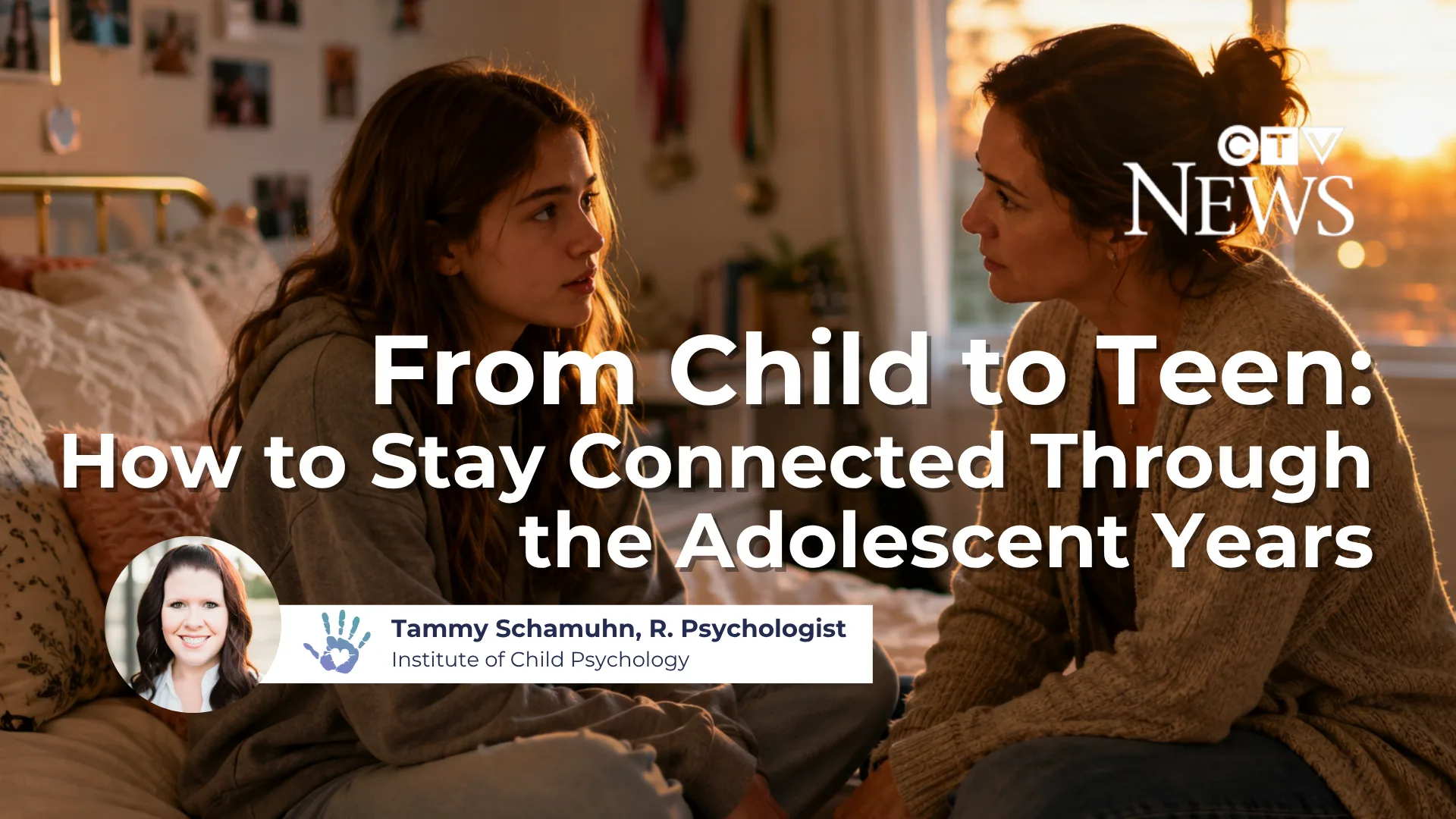
From Child to Teen: How to Stay Connected Through the Adolescent Years
About the Conversation
Adolescence is often described as one of the most significant periods of growth in a child’s life. While parents expect physical changes during the teenage years, many are surprised by the emotional, social, and neurological transformations that happen beneath the surface.
In a recent interview on CTV Morning Live Edmonton, registered psychologist and Institute of Child Psychology co-founder Tammy Schamuhn discussed what parents can expect as children enter adolescence and how they can support their teens through this important stage of development.
The Teenage Years Are a Time of Massive Change
The transition from childhood to adolescence is about far more than puberty. During the teen years, the brain undergoes extensive remodeling. Areas responsible for emotional processing develop earlier than the regions responsible for planning, impulse control, and decision-making.
This can leave parents wondering why their once predictable child suddenly seems more emotional, independent, sensitive, or reactive.
The reality is that much of this behavior is a normal part of development.
Teens are learning who they are, where they fit in the world, and how to navigate increasing independence. While this process can be challenging for families, it is also an important part of becoming a healthy adult.
Why Connection Matters More Than Ever
One of the biggest misconceptions about adolescence is that teenagers no longer need their parents.
While teens may seek more independence, they still rely heavily on their caregivers for emotional support, guidance, and stability. The difference is that the relationship often needs to evolve.
Rather than directing every aspect of their lives, parents are called to become trusted guides. This means listening more, remaining curious, and creating opportunities for meaningful connection.
When teens feel safe talking with their parents, they are more likely to seek support when they face challenges related to friendships, mental health, school pressures, social media, or risky situations.
Expect Emotional Ups and Downs
Hormonal changes, brain development, social pressures, and increasing responsibilities can all contribute to emotional highs and lows.
Parents can help by:
- Staying calm during emotional moments.
- Validating feelings before trying to solve problems.
- Creating routines and predictability at home.
- Maintaining open communication.
- Focusing on connection rather than control.
These strategies help teens feel understood while also teaching them important emotional regulation skills.
Supporting Independence Without Losing Connection
As children grow, they naturally begin pushing for more autonomy. While this can sometimes feel uncomfortable for parents, independence is a healthy developmental goal.
The key is finding a balance between freedom and guidance.
Parents can support healthy independence by:
- Allowing age-appropriate decision-making.
- Encouraging problem-solving skills.
- Maintaining clear family values and expectations.
- Being available when support is needed.
- Remaining involved in their teen’s life without becoming intrusive.
Teens often resist advice they did not ask for, but they continue to benefit greatly from knowing their parents are present, interested, and available.
The Goal Is Progress, Not Perfection
The adolescent years can be exciting, challenging, and at times overwhelming for both parents and teens. It is important to remember that conflict, mistakes, and growing pains are all part of the process.
Parents do not need to handle every situation perfectly. What matters most is maintaining a strong relationship, repairing when mistakes happen, and creating an environment where teens feel safe, supported, and loved.
As Tammy Schamuhn emphasized, adolescence is a transformation. While it may sometimes feel messy, it is also a period filled with opportunities for growth, resilience, and deeper family connection.
Key Takeaways
- Adolescence involves major emotional, social, and brain development.
- Teens still need strong parental connection, even as they seek independence.
- Emotional ups and downs are often a normal part of development.
- Parents can support teens by listening, validating feelings, and maintaining open communication.
- The goal is not perfect parenting but staying connected throughout the journey.







Comments are closed.