
 We’re really excited this this landmark, 100th episode to share with you. And this has been a very hot topic in the media for us and blog entries and interviews, as all of you are listening right about the time where kids have just settled into school
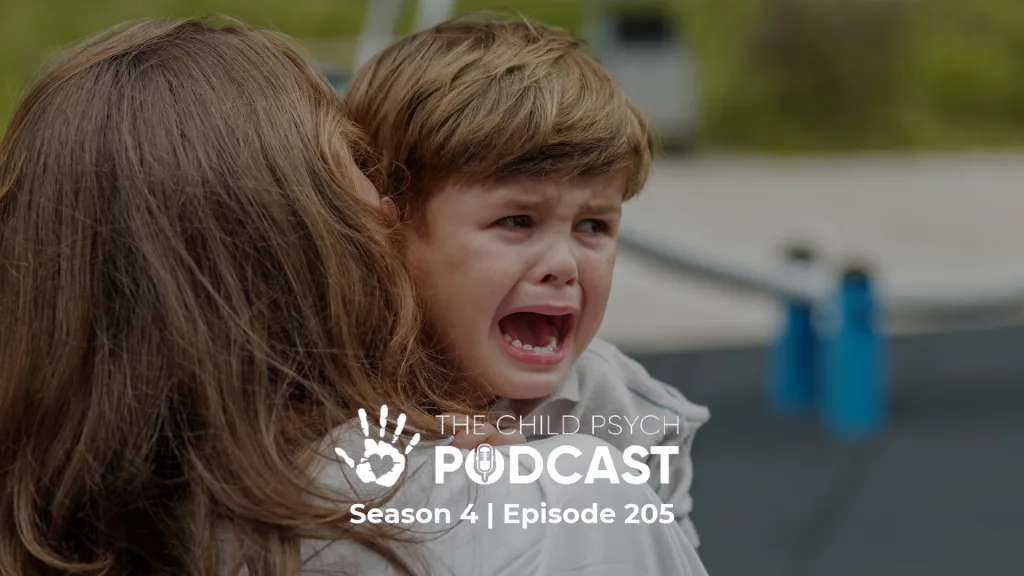
Almost every parent has dealt with after-school restraint collapse at some point
[Tania] We’re right at the end of September here and this is a personal example I’ll tell you, last year my little one Maya was in full day kindergarten, and honestly, our first two weeks were beautiful. Honeymoon period, fantastic, and then I was picking her up from the bus, and the bus is not even 800 meters from my house, and little Maya was probably having three meltdowns from the bus to home that was on the floor, backpack down and I’m going “what’s happened with my sweet little girl.” And I think that that experience is familiar for many parents.
[Tammy] I think every kiddo is different versus I’ve got one who would have an absolute meltdown like that. I’ve got one who’s just clingy when he feels that way. It’s clinging, and “I want to be with you”, and just following me around. Then I have a teenager who hides in her room, who is just like “I can’t.” She can’t talk to us; she doesn’t want to engage. She just wants food and to hide for at least a full hour, which I am fully on board with now. Just seeing how it can be, it can go really poorly if you try to engage her in that first hour.
Our kids are like pressure cookers
[Tania] So maybe let’s talk about what is happening exactly for our kiddos, and then what we can do to help them a little bit. So the analogy that I often enough to use is that of kind of a pressure cooker. They wake up in the morning, many children are so rushed: so it’s “Get up, have your breakfast. Where’s your backpack? Oh my goodness, I forgot to make your lunch! Get on the bus. . .” – rush, rush, rush, rush, rush. Then they get to school and then suddenly there’s all of these pressures at school. “Who am I going to play with? Am I supposed to catch the bus home? I have to tell my teacher I don’t have a pencil today.” All of these things that they’re having to deal with largely by themselves. So we have this pressure increasing throughout the day for them. And then finally when they get home to their safe place to their safe person, we see that the lid comes off in different ways for different kids. But the lid comes off. And finally, in that safe place, all that pressure can just be released from our kiddos.
What do you want to do after a long day at the office?
[Tammy] It’s at the time of day where we’re tired too. We’ve been at the office all day, (then) commuting, and then it’s often what happens is we inadvertently end up making it worse when we decide I just want to get the homework done with because it’s going to be a battle and I want to enjoy my evening or I’ve been sitting in this mess all day and I just wanted to clean it up. So there’s this urgency to kind of pull off the Band-Aid, and just get the yucky stuff over with first.
I know if I’ve had a hard day at work, now there’s house work, and there things we have to do with our kids, but if my job is to sit in front of a computer screen all day and then it’s the end of the day and my work day is supposed to be over and then I get home and someone asks me to write another blog entry or you need to do another interview or you need to write another chapter I’d be like to hell with this. I am done. And of course, I’m probably going to have a meltdown—an adult meltdown— but I’m going to quickly shut down because my time is precious to me. I think we forget that you know, kids are at school, that’s their job. That’s their work. And they need to come home and the brain needs time to relax. The brain needs time to decompress and to process their day, and if we put another task on them, like chores or homework, that brains like had enough. Like it’s going to go into shut down mode.
[Tania] You know, I think the other thing is that we often don’t remember that we actually have a lot of control over our lives. So I can get home and go like “oh, you know, I just want to sit outside and have a cup of tea before I do anything else” But with our kiddos, they often don’t have that same sense of control. So it’s like: “You must do the following things or else. . .” and then when we think about these little ones, who have really held us together all day, sometimes what we see their parents get so frustrated that we end up punishing them. But when we start to really think about the reason underneath the behaviour, it really tugs on those heart strings.The Pushback: The Fight for Autonomy
[Tammy] Well, think about it. They’ve also been given so much structure and very little autonomy throughout the day at school. Kids are supposed to play and to use their imagination. They’re supposed to have that autonomy when they get home to create their worlds or to express themselves creatively through art or dance or whatever it is they do. But if we impose more structure or more limits in that first hour, they’re going to push back. There’s going to be resistance because they’ve been doing that all day long. My kids will say “I just want to relax.”1. Stay away from the screen for the first hour
[Tania] So I think as we talk about relaxing, let’s look at what parents can do when their kiddos do come home. I think that for many parents now, unfortunately, free time or relaxation time is now equated with popping Netflix on, right? You had a long day, let’s throw a show on. I understand it. You’re tired too. But the one thing that we really want to put across is that we as much as possible, we want to stay away from those screens. I know it’s alluring, but we want to stay away.
[Tammy] I just think we’ve talked to other episodes about what that does, but the meltdowns come because kids are pumped full of cortisol, a stress hormone. And we want to turn the dial down on that cortisol. But when you have a screen, they are quiet because we’re getting a lot of dopamine, a neurotransmitter involved with motivation and reward. So yes, they are quiet when they’re getting dopamine, we all are. It’s like we’re quiet when we’re eating fast food, we’re very happy. We get these fixes, but this second you take away this screen, the meltdown is going to be even bigger than the meltdown you would have had without the screen—it’s going to amplify it.
Yeah, we’re just basically delaying the meltdown. So I think what Tania is getting at, is we have to find ways that when our kids come home to refuel their body and to turn that pressure cooker down. What she’s really talking about is how do we reduce cortisol? That’s what we want. We want to reduce the cortisol and adrenaline that have been pumping through their systems from feeling overstimulated and over controlled, and in these social situations maybe they’re not equipped to handle yet.
2. Fuel their little bodies
[Tania] So when they get home we really want to focus on giving them a healthy snack that’s really going to help really address that cortisol overload for them. That’s going to help their body to calm down. We have a wonderful podcast with Dr. Saeed who talks about this. If you want to look into what exactly you can give your kiddos, listen to Doctor Saeed’s podcast. But we want to give them that snack. For each of my girls it’s different. With one of them, she wants to be able to choose her own snack. For the other one, she gets completely overwhelmed by choices, so I’ve found in my own house it’s just easier to put something out for snack for them.
[Tammy] My kids want the choice too, but that being said, I’ll limit certain things. Like I don’t want a lot of processed food. Like you can have X Y or Z but not that. Let’s try to stay healthy. You can have it ready for them in the vehicle. I’ve been starting to do that now because so if we have an organized activity about an hour out, I want to give them something.
3. Don’t talk too much & what questions to ask
[Tania] I think that that’s a very tempting time that we try and drill into their day and say “Tell me about your day. Did anyone play with you?” Often all our worries get poured into our kid at snack time. So the one thing we’re going to say is try and keep it as simple as possible. Don’t talk too much.
[Tammy] I think my go to with my son as he gets a snack and we sit on the couch together like we cuddle. He’s big cuddler and not all kids are cuddly. But my son right now is really cuddly and I’ll ask him (and I replicate this question at dinner time) “Just tell me what was like one of the best parts of your day and one of the worst parts of your day.” Just simple and it doesn’t have to be the worst, but something that wasn’t really great. Just like, that’s it. And you don’t need to process it and over-talk it. It’s just this one thing. When you ask “How was your day?” you’re going to get this really blanket answer: “fine”. Kids are very in the moment, so they’re very present compared to adults. They usually don’t sit there and reflect on the day and the way adults do. If you ask a closed ended question, you’re getting a closed ended answer—which is a yes/no or fine. But if we can ask specifically the best or the worst or one thing you were grateful for today or who was one person who was kind to you. Something to just help a little and get a sense of the tone for the day?
[Tania] The one that we always do is what’s one brave thing that you did today. I love those questions. And then, children are going to be different.
4. Movement and play
[Tania] So for our little ones particularly, they really need to move those bodies and if they can do it outside, even better. We actually have a at our house a little mud pit that when it’s warm enough, the girls go out and they just love that sensory play. They love moving their bodies. So for some kiddos, it’s going to be really important that they can regulate themselves by moving their body. Being outside in the sunshine, in nature are all beautiful de-stressors.
[Tammy] It was the craziest thing, picked up my son (from school) but he had swimming lessons. I actually spaced it out on purpose so he has an hour before the time he gets out from school until swimming so we can do something. I took him to the park and he is in grade 3 so he’s 8 years-old. He dug in the sand for an hour. I don’t know what he just said exactly, something like “my friends and I are going to sell the clay.” I was like, alright—this is a landscaping business apparently he’s developing. But honestly, it was so cathartic for him because I think there’s that temperature difference and he’s finding things, and by the time he was done digging in the sand pit like he had a hole like 3 feet deep. He was so quiet and so regulated. That’s a lovely thing about nature, it really gets them back to the child you had before you sent them to school.
[Tania] As you talk about Ayden, it’s incorporating heavy work into that too. And we know, we know that heavy work helps to calm the body as well.
[Tammy] But all kids are different. My son wants that gross motor activity. My middle is very creative; she loves to draw and colour after school, and listen to music. So they’re not allowed screens, meaning we don’t do Netflix or phones, but what I did buy them were MP3 players. So I have several MP3 players and they all have their own Spotify accounts, and they absolutely love them. So Rosie she loves to draw and listen to music, and my 16 year old hides in her room. She gets a snack, and she’s like “no one talk to me” (she’s highly overwhelmed by schools because she’s very introverted and highly sensitive). She goes into her room, puts on her music, and sings at the top of her lungs until the floor vibrates. I don’t think she realizes that her voice carries that far, but she’s not on a phone. That’s the way she decompresses and then she takes the dogs for a walk when she’s done. That’s kind of our routine now. And then my son goes outside, or sometimes he colors. We have figured out what works for our kids but they’re all different. They all want food, but one wants cuddles, one wants alone time, and one wants quiet time with just music and like her thoughts.
5. No homework right after school
[Tammy ] And no homework, no homework, no homework! You know kids before high school don’t need a lot of homework anyway, and I pretty much limit it to flash cards before bed for like 5 minutes for math and reading, and that’s mostly for my younger ones, unless they have some minor homework and then it’s up to them. If you want a really great podcast, we did an episode with Dr. William Stixrud on the self-driven child, and he talks about being your child’s homework consultants. And so if you’re having problems with homework. But don’t do it right after school.
[Tania] Just wait. My girls have been too young to do homework, but prior to being their mom, I was a foster mom to four kids, and they used to get homework. And what I would do is I would set a timer and say: 15 minutes of homework. That’s it. And whatever we don’t get done, I will send a note to your teacher saying that it was outside of our homework time frame. So everybody’s going to approach this differently, but figure out what works for your family.
6. The tears are the answer
I think the biggest thing is to understand is that this is normal. Kids have these meltdowns, especially the first couple months of school after they’ve had the summer off, but in the event they have one, maybe Tania you want to cover that? What the heck do parents do when they blow? What’s our job as parents? What do I do with this?
[Tania] Yeah, and so a couple of things here. Again, we want to remain curious: What’s really going on here? Get down on their level, don’t stand over them and yell and say “I’m going to take away this or I’m taking away that! You’re not having your party on Friday.” This is a time where we really want to zip our lips. I always say as few words as possible. I’ve learned as a mom when I talk in these times, I end up having to do lots of repair. Instead, be quiet, regulate yourself, breathe deeply, get down on their level and say “I’m here. I’ve got you. You’re safe. I love you” We might need to put in a limit, so we might need to say “no hitting.” We might need to hold hands “gentle hands.” We might need to move them into a quieter space, but in that moment, we’re really just stepping in as their calm brain, and we’re really conveying to them: “I can hold you through this experience. I can be with you in this experience.” And then later on when they’re calm, another time we can talk to them about. “What happened? How do we make after school a little bit easier?” Kids are amazing problem solvers. We often don’t give them enough credit for it, but this is later on. This is when we’re going for a walk. We’re in the car when they’re calm, so we start to teach them those skills. “What do I actually need in this moment right now?” But when it’s actually happening, we have to be their calm body.
Calm breath. Calm heart. Calm voice for them.
Tears are the answer, not the problem
[Tammy] It’s a grounding presence and knowing that often the tantrum or the crying is actually the answer to your problem. Meaning, there had to be a release valve and it’s better they do it with you than someone at school. Otherwise it’s going to come out as aggression with their siblings or a kid at school— there’s all these things that can go wrong, but that was a great reframe for me when I first had kids: the tears are the answer, not the problem. The tears are the answer, because there’s a reset button that happens in their parasympathetic nervous system, which is like the breaks of the brain kicks on, and so it’s often needed. I tell Allan, my husband, they’re emotionally constipated. They need to blow. He asked if it’s a good thing? I was like YES! Look how they are when they’re done, this is what needed to happen. It had to come out somewhere.
You’re their safe person
[Tania] And just a reminder that when they can do that with you, it’s because you are their safe person, you are a safe place.
Just one final thing for me before we wrap up, if this is going on for a little while, it’s really important to just touch base with your school, because sometimes there are things that are happening that our child might be holding onto. So don’t always just go: Oh, this is just them blowing after school. This is just an after-school meltdown. Check in with the teachers and ask “Is there something happening here? Is my child facing difficulties?” Just to make sure that we’re covering all of our bases to make sure that we know what’s fully happening for our kiddo.
[Tammy] And I did that with my middle and it turns it was auditory sensitivities. She would have these feelings when the class was really loud, so we got her noise cancelling headphones. But that was a discovery process between her teacher and I. Then it’s like, amazing, but now what do we do with that? And then it’s collaborative. And then, all of a sudden, the meltdowns went down because she wasn’t so overwhelmed with all the noise in the classroom, she could actually focus. But it was something just as simple as a conversation with an with an educator and maybe they notice when they could see her getting stressed out it. (Turns out) it was always when kids were being loud. (Now when) they’re doing their work, so she can just put on the headphones.









2 Responses
Love this info! Completely normalizes what goes on with kiddos and doesn’t pathologies it
Love how this doesn’t pathologies kids